The “Contrasting Dye” of Family

So, I was lying on the table as a tech got me ready for a CT Scan, and asking questions. He confirmed what I had assumed: that the intravenous contrasting dye goes everywhere your circulatory system goes. How the results are read depends on what the radiologist looks for, which in turn depends on what the doctor asked for. If he needs information about your kidneys, the report won’t mention your lungs.

This got me thinking about genealogy and family research–the question of “what’s there” vs. “what we’re looking for.” Some people inject “Magruder” into archival records, into a community, into the body politic, to find illustrious connections. I get a small but steady trickle of messages from people interested in royal descent, for example, which doesn’t interest me at all. At the opposite end of the spectrum, some just want to identify a great-grandmother. Sometimes I can help with that, not always.

When I started my Magruder book project I wanted to see what an injection of “Magruder” would show about my family’s involvement in slavery. As neither family trees nor archival records have a natural boundary like that of a single human body, I decided my circulatory system would be limited to Maryland and D.C., with occasional excursions to Virginia.

Within that body of evidence, I would look at two questions.

First, would I find that my relatives and other Magruder descendants had taken part in every aspect of the pernicious institution, from manumissions to slave trading?

Some answers so far:

Claims by descendants (including my grandmother) that an ancestor “freed his slaves” far outnumber manumissions that are visible in the records. The 19th century requirement that free blacks in Maryland carry papers proving their status means that, at least within the time span of that law, the answer is not ambiguous. (My great-great-grandfather, it turns out, was living in D.C. at the time in question, so I am still researching his story.)

And, so far, I have found just one man who (according to one of his half-siblings) signed on as driver for a slave trader trafficking people to the Deep South. Magruders did do business with slave traders, however, both buying and selling human beings. More than a million people were trafficked from the Upper South to the Deep South between 1808 and Emancipation, including a substantial percentage of people enslaved in Maryland and Virginia, and the sale of healthy, young workers was lucrative. Magruders did not stand apart from this reality. In a few cases, Magruders who advertised people for sale (in between ads for hay, cattle, furniture, and shoes) took steps to ensure that they could not be removed from the state.

Second, would my search paths illuminate the lives of any of the thousands of people who were enslaved by Magruders and descendants, from the 1660s to the 1860s?

The answer so far:

A few. The best resources are the so-called Slave Statistics compiled from 1864 (date of Maryland Emancipation) to 1869. These are the affidavits sworn by enslavers who hoped that either the state or the Federal government would compensate them for the loss of their captive laborers. Filing required a second affidavit affirming that the filer had remained true to the Union and not supported the rebellion–which, of course, many could not or would not swear to. The whole process was voluntary and aspirational–compensation did not materialize–so the record is partial, but the affidavits provide each enslaved person’s first and last name and age. This is a tremendous head-start for descendants who are researching their family trees–full name, approximate age, and last enslaver. In some cases, family groupings are clear. Once those relationships have been established, the next question is: how do we get to the next generation back?

A large part of my research in the last ten years has focused on helping with that question by connecting the Slave Statistics for Prince George’s County to the probate, land, and tax records of enslavers. In some cases I have been able to assemble known or likely family lines and siblings by tracing them through several generations of white family records. I have posted about this before and will do so again. In my book, I sometimes pause the narrative to provide explicit information about “Following the Lines” of these families.

And then, of course, I am too curious for my own good.

People, places, events…things surface in my reading that I just have to learn more about. Rabbit holes turn into tunnels. Or should I say that what I thought was a capillary turns out to be an artery.

Which is how the Civil War / Emancipation era came to dominate my research for the last…well, it might be three years. Working title for that section of the book: “When Everything Happened.”

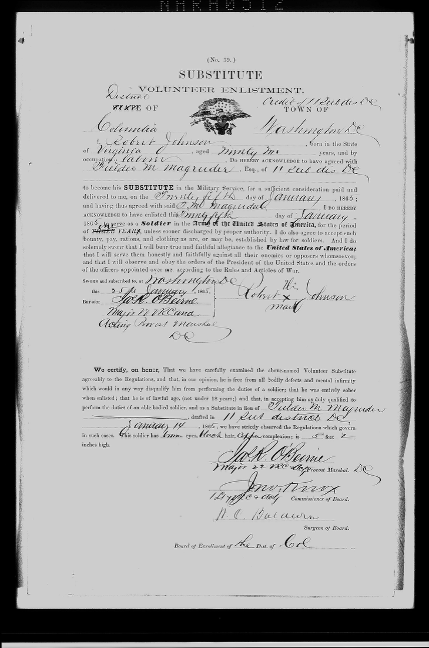
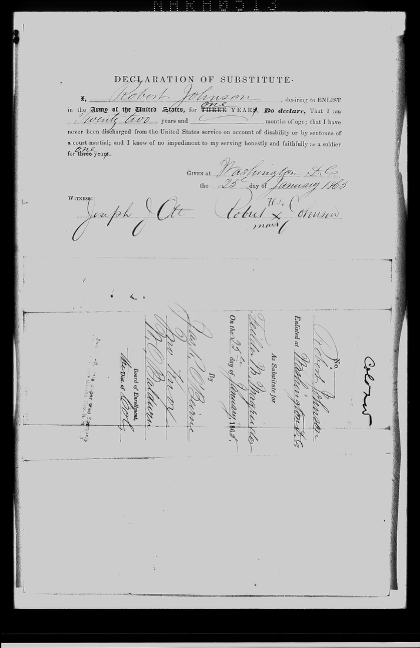
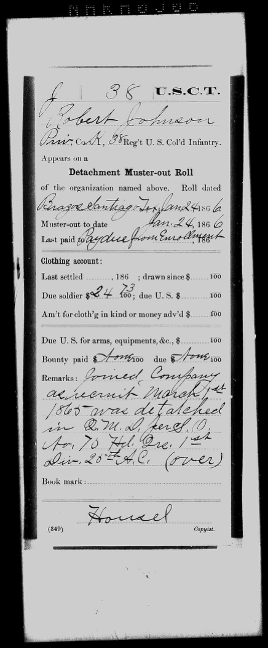
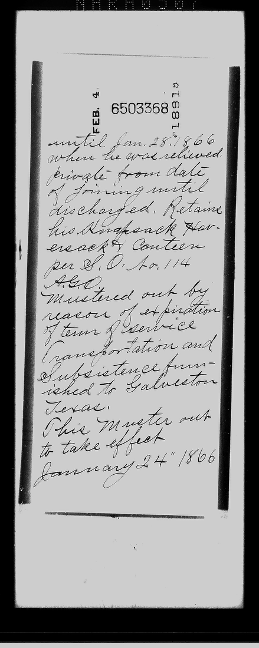
So, it’s time to share. Starting now, I will try to post at least once a week about something in my research. I’m starting with Civil War soldiers–both Yanks and Rebs, most white, two black–whose lives I never would have known about had they not been illuminated by the “contrasting dye” of Magruder descent.

Plantations as Complex Historic Places

…the most recent post from Our Folks’ Tales, Andi Cumbo-Floyd’s blog “dedicated to telling the stories of enslaved people, free people of color, and the descendants of these individuals.” You’ll also find there good pages of links for African American history and genealogy. I’ve added this blog to the links on this site. I also left a long comment in response to this entry re: plantations, and invite you also to share your thoughts. More conversation on this topic is currently happening on the Coming to the Table Facebook group.


A resource for African-American Magruders

Many thanks to James Louis Bacon for directing me to Civil War Washington, which includes a number of Emancipation Petitions from the war years. In a quick search I found several African American Magruders/McGruders, and others who were owned by, freed by, or had been sold by Magruders / McGruders or McGregors.

Choose “Texts,” where all are searchable by key words. Be sure to search under all possible spellings. The number of documents is not tremendous, but all have been transcribed, and include personal descriptions, detail about how the petitioner acquired the services of each person, and, in some cases, family relationships. Some had been brought from to D.C. from Maryland or Virginia. Good luck in your quest!

More on Washington & May (or Mary) McGruder

I could as easily have titled this post “Do as I Say, Not as I Do.” I say to always search census records with multiple spellings, and then, if you still don’t succeed, try searching for neighbors. Apparently, I did neither of these things the first time I searched for census records for Washington Magruder and his wife May. I was also under the sway of Alice Maude Ewell’s 1931 memoir, in which she wrote that Washington and May had been free for many years before the war, and that after the war they moved to Washington.

Well, on a second try, I found them still in Prince William County, Virginia, in 1870 and 1880. So if they did “follow their children to Washington City,” as Ewell put it, they did so at a very advanced age. I found no records for them prior to 1870. In 1870, three children named McGruder lived with them, the youngest possibly a grandchild. In 1880, due to extreme fading of the ink, their name has been transcribed on Ancestry.com as “McGruden.” The only child with them at that time was seven year-old James Ward. In both years, they lived next door to Alice Maude Ewell with her parents and many siblings. Read all about it on the updated version of Washington McGruder

Probing the Past

I’ve added a link to my blogroll for this excellent site (from the Roy Rosenzweig Center for History and New Media at George Mason University and Gunston Hall Plantation). You’ll find, in addition to resources for teachers, a fully-searchable archive of 325 probate inventories from the Chesapeake region of Maryland and Virginia from the period of 1740 to 1810. As the introduction says–

Probate records provide valuable information about the lifestyles of people during the colonial and early national periods. Such listings of possessions, from a time when household goods were not widely mass-produced, illuminate a family’s routines, rituals, and social relations, as well as a region’s economy and connection to larger markets. They also shed light on attitudes and policies toward slavery. For famous people, these records enrich our knowledge and understanding of their daily lives and values. For ordinary people, they offer a rare glimpse into their lived experience. These records also provide an opportunity to engage in comparative studies with other eras and to analyze how culture changes over time.

The project was begun by researchers at George Mason’s home, Gunston Hall Plantation, as a way of building a context for data about Mason and life on his plantation. The criteria used in selecting the 325 estates therefore assure that this is primarily a portrait of the wealthiest planters of his day. A few others sneak in because they have features of special interest, such as room-by-room inventories. Three Magruders by name and other Magruders by female descent are included. Note that in the record for Nathaniel Magruder (who met the room-by-room criterion) the transcriber omitted two pages, including the page where slaves are inventoried. All pages seem to be present in the scans of the original document.